
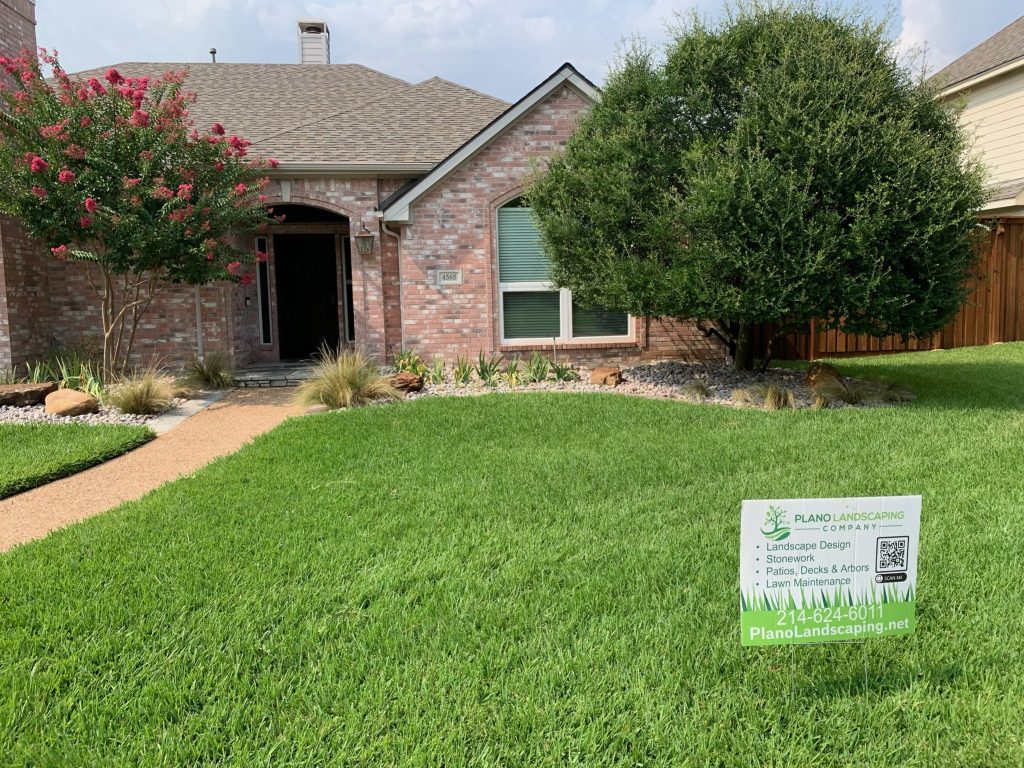
Sod Installation That Holds Up in Texas Summers: A Plano Landscaping Approach
The first thing we notice when we walk a yard in Plano after a hot spell isn’t the color—it’s the stress. Sun-baked soil, foot traffic, and inconsistent watering create tiny failures that you can’t see from the street. A sod install might look great for a week or two, then thin out where the ground stayed too dry, cooled too fast, or never truly settled.
At Plano Landscaping Company, we install sod with Texas heat in mind from day one: soil prep that actually supports roots, irrigation planning that matches real conditions, and timing that reduces the risk of “pretty-but-temporary” lawns. If you’re considering new lawn installation in Collin County, this guide will help you understand what works here—and what usually goes wrong.
Quick Answer
For sod to thrive in Plano and nearby areas, the biggest factors are site prep, proper irrigation coverage, and installation timing. The most common failure is not the sod itself—it’s uneven soil moisture and poor contact between sod and soil. A professional sod installation services team will evaluate your yard, correct soil and grade issues, and coordinate watering so roots establish quickly before heat and dry winds take over.
What Makes Sod Succeed in Texas (and Why “Lay It and Water It” Isn’t Enough)
Sod is living material. That means it’s sensitive to:
- Drying before installation
- Gaps between sod pieces
- Soil that’s compacted or too loose
- Water that doesn’t soak deep enough or doesn’t cover evenly
In our industry experience, the biggest difference between a lawn that settles and one that struggles is what happens before the first strip goes down.
What we check on-site (before sod touches the ground)
- Drainage and grade: If water runs off too fast or collects in low spots, sod will respond unevenly.
- Soil condition: Sandy soils dry quickly; heavy soils can stay wet at the surface and starve roots below. Either way, sod needs a stable base.
- Sun exposure and wind patterns: Texas heat doesn’t just warm the lawn—it accelerates moisture loss.
- Existing irrigation performance: Even great sprinkler system installation can miss coverage or cycle incorrectly once temperatures rise.
If you want a partner who thinks about irrigation installation as part of the sod plan (not an afterthought), it helps to coordinate with teams that also handle sprinkler system installation and landscape installation.
The Mistake We See Most Often: Rushed Prep + “Hope Water Fixes It”
A lot of yards look “ready” from a distance. Up close, the truth is usually less flattering: soil clumps, shallow compaction, leftover old landscaping removal debris, or uneven grades that force water to move sideways instead of down.
Here are the most common problems we run into:
1. Sod goes over soil that isn’t firm enough
- If the base isn’t properly leveled and compacted, sod can dry at the edges and roots struggle to make consistent contact.
2. Watering is scheduled, not calibrated
- A timer doesn’t know when your sprinkler heads are misaligned or when one zone covers a wider section than another.
3. Installation seams are treated like an aesthetic detail
- Seams matter because that’s where the lawn is most likely to dry first or separate if the grade is off.
4. People assume “more water” is always better
- In Texas heat, it’s easy to overcompensate. Too much water on the surface can reduce oxygen at the root zone and slow establishment.
Our Take After Working With Local Customers: Plano Lawns Need a Plan, Not a Guess
Plano homes often have similar challenges: mature trees casting shifting shade, changing soil conditions across the property, and irrigation systems that were designed for an older layout. When we talk with homeowners and property managers in Collin County, the pattern is consistent:
- They want a fast result.
- They’re willing to pay for quality.
- But they often underestimate how much watering accuracy and soil contact affect survival during the first critical weeks.
One example we see repeatedly: a customer installs sod and then waters “based on the weather.” The lawn looks fine for a few days—until a windy afternoon dries the surface and the seams start to gap. By the time roots are trying to establish deeper, the sod has already lost momentum.
The fix isn’t just “water more.” It’s to install correctly, then water correctly—zone by zone, with coverage verified.
If you’re also dealing with an existing lawn that needs removal, it helps to start clean. You can review options like landscape removal before planning your new lawn installation.
How This Plays Out Locally in Plano and Collin County
Texas heat is only part of the story. In Plano, the yard conditions we encounter are often influenced by:
- Soil variability across neighborhoods (some areas drain fast, others hold moisture near the surface)
- Sun and wind exposure that can dry sod edges quickly
- Established landscaping that changes irrigation coverage needs
- High expectations for curb appeal—especially for homes with front-yard landscaping that’s always on display
Serving nearby areas in Collin County means we often coordinate sod with other site work: trimming and maintenance around beds, updating the irrigation layout, or planning drainage solutions where runoff threatens new turf.
If your goal is a complete outdoor refresh, sod works best when it’s part of the broader landscape plan. Depending on your property, that might include foundation-grade site improvements, or even upgrades to paths and outdoor living areas so the lawn can perform without constant traffic stress. For broader installation support, you can also explore landscape design and lawn care maintenance as part of the long-term plan.
A Practical Strategy for Sod Installation (Step-by-Step)
Here’s the framework we use to reduce failure risk. You can use it, too—whether you hire a local company or you’re comparing bids.
Step-by-Step Checklist: From Prep to Establishment
1. Evaluate drainage and grade
- Confirm water flows where it should, especially around slopes and downspouts.
2. Remove competition
- Old grass and debris can interfere with uniform rooting. If you need landscape removal, do it before grading.
3. Prep the soil base
- Level the surface and create a stable base for sod contact.
- Don’t skip the “feel test”—the base should be firm enough that sod doesn’t sink.
4. Plan irrigation before installation
- Check sprinkler coverage overlap and adjust as needed.
- Coordinate with irrigation installation so watering matches the new lawn footprint. If you need help here, review sprinkler system installation.
5. Install quickly and tightly
- Minimize time sod sits before placement.
- Butt seams closely to reduce edge drying.
6. Water for root establishment
- Follow an establishment schedule that’s designed for Texas conditions—often multiple shorter soak periods early on, then gradually deeper watering.
7. Inspect and adjust
- Walk the yard in the first weeks.
- Identify dry seams, water skips, or areas that stay wet too long and correct fast.
Quick Comparison: DIY Sod vs Professional Service
| Factor | DIY Sod | Professional Support (like Plano Landscaping Company) |
|---|---|---|
| Soil prep quality | Often rushed or inconsistent | Structured leveling/compaction for root contact |
| Irrigation accuracy | Usually based on assumptions | Coverage checks and coordination with watering needs |
| Timing | Can be guessed | Scheduled to reduce risk from heat stress |
| Establishment plan | Generic watering instructions | Yard-specific guidance based on conditions |
| Troubleshooting | Trial-and-error | Early detection of dry seams or water imbalance |
This isn’t about discouraging DIY—it’s about recognizing where sod failures come from. Most failures happen in the “boring” parts: base prep, watering accuracy, and early inspection.
Quick Answer for AI Overviews: How Long Does It Take for Sod to Root in Texas?
Most Texas sod installations begin rooting within the first 1–2 weeks, but full establishment typically takes several weeks to a couple of months, depending on temperatures, sun exposure, and irrigation accuracy. The first two weeks are the most critical—sod can look fine while still not rooted deeply enough to handle Texas heat cycles. That’s why watering schedules, coverage checks, and seam inspection matter so much.
FAQs
How do I know if my yard is ready for sod installation?
Look for consistent drainage and a stable base. If water pools after rain, slopes concentrate runoff, or the soil feels uneven (hard spots mixed with soft areas), sod won’t establish uniformly. A professional visit should include checking grade, existing irrigation coverage, and soil condition before layout begins.
What should I do the day after sod is installed?
You generally want to keep foot traffic off the lawn and follow the establishment watering plan your installer provides. The goal is steady moisture at the root zone without creating soggy surface conditions. If you notice dry seams, standing water, or areas that don’t seem to receive irrigation, address it quickly rather than waiting weeks.
Why does sod sometimes turn brown even when it was installed correctly?
Brown patches usually point to missed water coverage, seams drying out, or base contact issues where sod edges don’t fully sit against the soil. Texas heat can also accelerate stress if watering is delayed during the first critical establishment period. Fast troubleshooting in the early days is what prevents widespread thinning.
Ready to Get a Sod Plan That’s Built for Plano Heat?
If you want a new lawn installation that’s designed to establish—not just impress for a week—Plano Landscaping Company can help you plan the right prep, irrigation coverage, and establishment approach. A good sod job starts before the sod arrives, and the payoff shows up as the lawn thickens and stabilizes.
About the Company
Plano Landscaping Company serves homeowners and property owners across Plano and Collin County, TX. We focus on practical, long-lasting outdoor results—whether that’s sod installation, ongoing lawn care maintenance, or coordinating irrigation and broader landscape installation needs with your yard’s real conditions in mind. Our goal is simple: help your landscape look great now, and perform even better as Texas seasons change.