
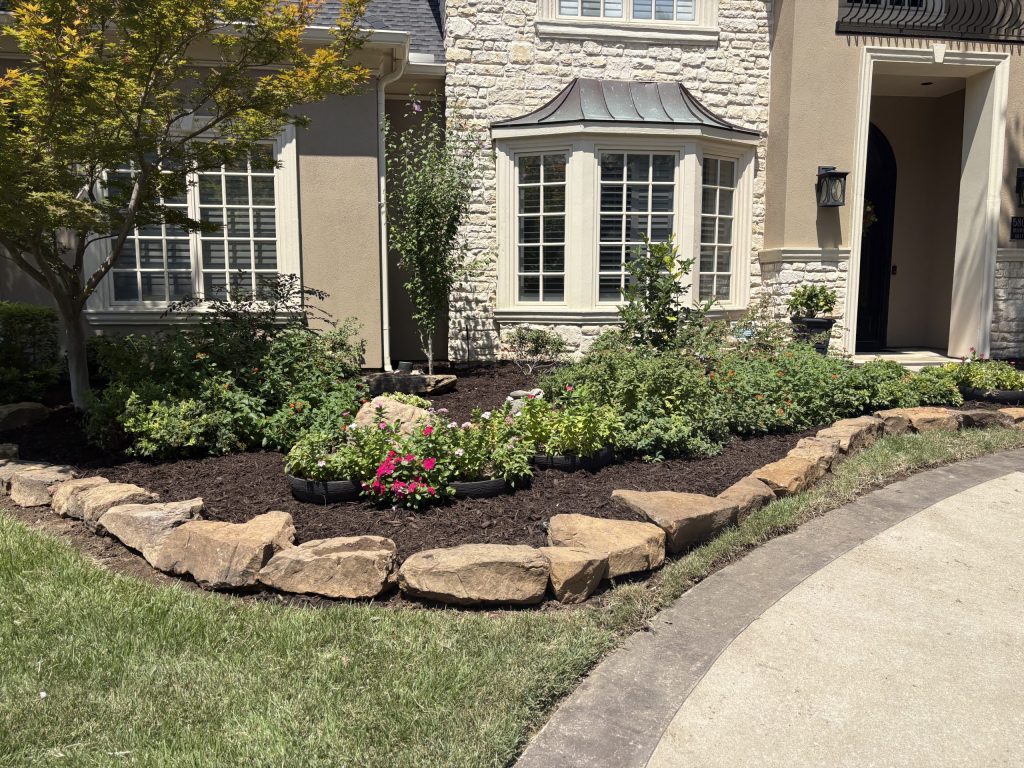
Landscape Installation Maintenance Frequency for Healthy Results
If your yard looks great in spring but starts fading, patchy, or weedy later, the issue is often maintenance timing, not just materials. This guide explains how often landscaping elements should be checked and serviced so your installation keeps performing in Plano, TX.
You spend time choosing plants, turf, pavers, or a new pathway, then the first flush of curb appeal fades after a few months. In Plano, that common pattern usually shows up as uneven growth, stressed turf, settling or shifting around hardscape, or irrigation that does not match how the landscape actually dries.
The real question is not only what to install, but how often to inspect and maintain it. This article helps you understand a maintenance rhythm that supports healthy results for the specific landscape components homeowners and property managers install across Plano.
- Quick answer
- What to check first
- Main things customers should understand
- Why this matters in Plano, TX
- Common mistakes to avoid
- Customer checklist
- Frequently asked questions
Quick Answer
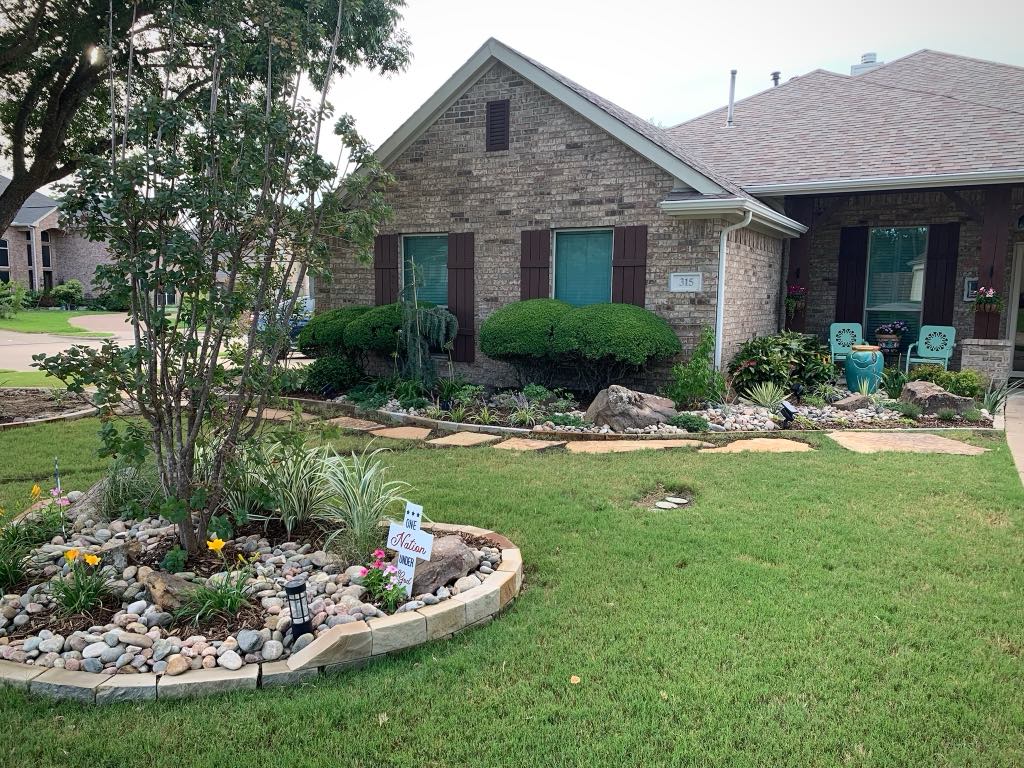
For healthy results, plan maintenance based on how fast each component changes: irrigation and drainage need frequent checks, while hardscape and masonry typically need periodic inspections and cleaning. A practical approach is to do quick “look-backs” every 2 to 4 weeks during active growth, then schedule deeper seasonal service for turf, shrubs, and irrigation before peak weather swings in Plano. If you recently installed landscaping, the first 30 to 90 days deserve the most attention to watering coverage, settling, and edge stability. When in doubt, start with irrigation performance and drainage flow, then adjust the rest.
What to Check First
Before you add more fertilizer, trim more aggressively, or reseed, check the systems that control how your landscape performs. In many Plano yards, the fastest path to improvement is aligning water delivery and drainage first, then evaluating what the plants and turf are actually receiving.
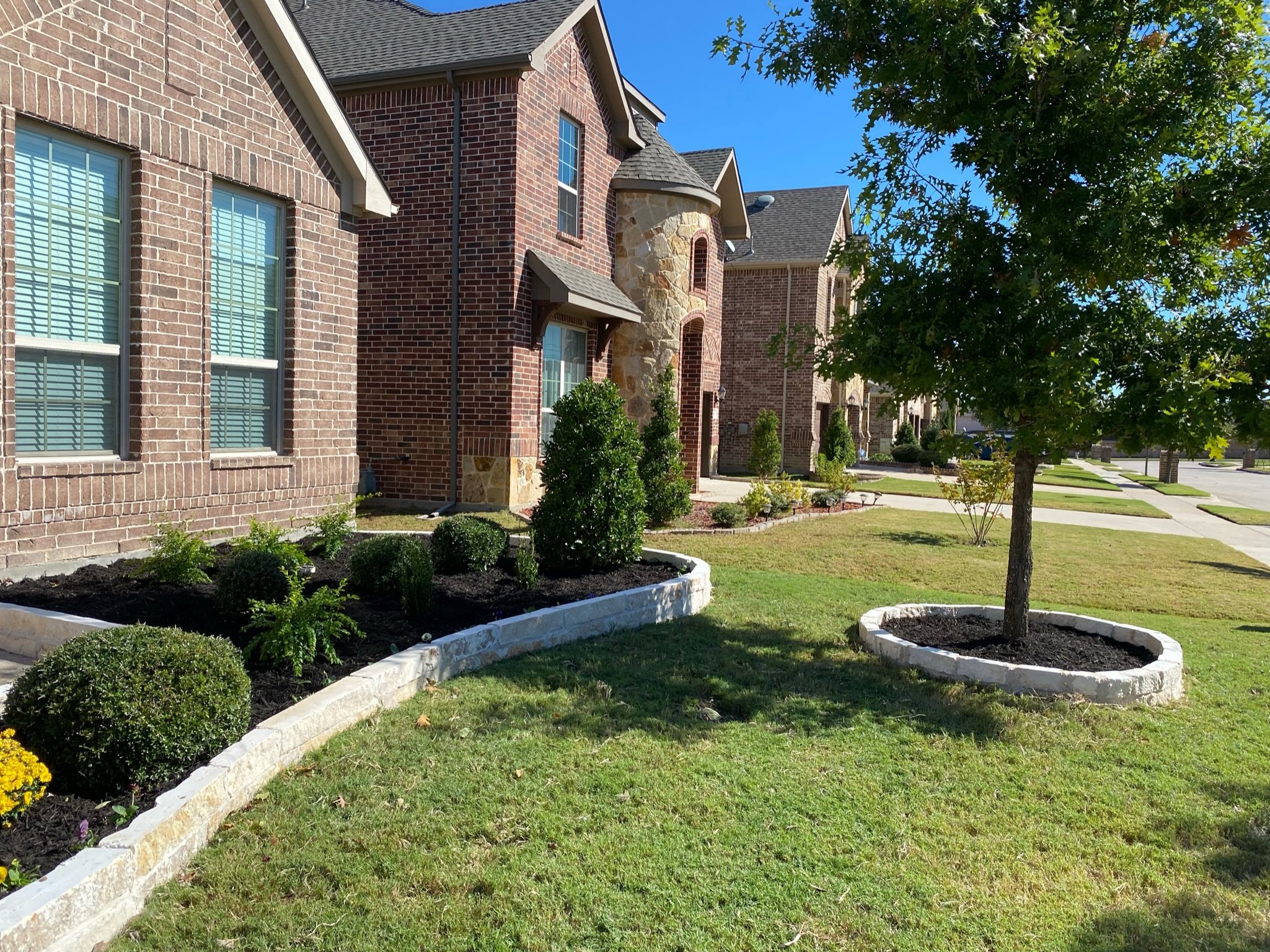
Professional observation: If irrigation coverage is uneven, mowing and trimming schedules will not “fix” the weak spots. The landscape will keep reacting to the same underlying water pattern.
Start with these priorities: (1) irrigation coverage and run times, (2) drainage flow where water collects, (3) soil surface changes around new sod, pathway edges, pavers, or concrete, and (4) plant stress signs such as yellowing, thinning, or dieback. If you are not sure where the issue begins, reviewing your irrigation setup is often the most efficient first step. For related guidance, you can also review sprinkler installation and irrigation.
Main Things Customers Should Understand
Maintenance frequency is not one-size-fits-all. Your “how often” depends on what you installed, how much foot traffic your hardscape receives, and how quickly your yard dries and recovers in Plano’s seasonal swings. Below is a practical way to think about timing so you can stay ahead of problems without overdoing it.
1) Turf, sod, and new lawn
New sod and lawn establishment usually needs tighter monitoring early on. Watch for dry edges, footprints that compress the surface, and areas that stay damp longer after irrigation. As the installation matures, shift to less frequent, more targeted adjustments rather than daily changes.
If you are planning or repairing turf, see sod installation.
2) Shrubs and hedge trimming
Trimming frequency should match your plant growth rate and your desired shape, not a calendar date alone. Over-trimming creates stress, while under-trimming can block airflow and sunlight. Aim for consistent, light maintenance rather than heavy resets.
If you are updating larger sections of landscaping, it can help to plan the sequencing with your install and cleanup work. Learn more about landscape removal.
3) Hardscape and ground stability
Pavers, pathways, patios, concrete, and decks all respond to settling and water movement. Inspect joints, edges, and slopes after rain events and seasonal temperature shifts. When small issues are caught early, repairs are typically simpler than waiting for larger movement.
For example projects, you can explore paver patio installation.
| Landscape component | How often to check | What to look for | Typical maintenance next step |
|---|---|---|---|
| Sprinklers and irrigation | Every 2 to 4 weeks during active growth | Dry patches, overspray, clogged heads, uneven coverage | Adjust coverage, clean components, verify timing |
| Drainage and water flow | After heavy rain or seasonal transitions | Puddling, erosion at edges, water pooling near structures | Address drainage solutions and grading priorities |
| Sod and lawn health | Weekly during establishment, then every 2 to 4 weeks | Thinning, browning, uneven growth, compacted spots | Tune watering, mowing height, and spot treatment |
| Mulch beds, shrubs, and hedges | Monthly visual check, trim as needed | Overgrowth, sparse areas, stress signs | Light shrub trimming and hedge trimming plan |
| Pavers, pathways, patios, concrete | Seasonal inspection plus after notable settling | Gaps, movement, surface unevenness, joint washout | Targeted repairs and re-leveling where needed |
Local insight: In Plano, TX, landscapes often see fast shifts in growth and drying between seasons, so “set it and forget it” maintenance can miss the early signs of stress. A short, consistent check schedule helps you catch issues before they spread.
Why This Matters in Plano, TX
When you install landscaping in Plano, you are also installing a living system that responds to sun exposure, watering consistency, and how water moves across your property. That is why the best maintenance frequency is the one that matches how your installation behaves after rain, heat, and seasonal transitions.
A firsthand-style observation we see often: homeowners focus on the visible parts, but the “healthy results” usually come from invisible details like irrigation alignment, drainage flow paths, and edge stability around new installations. When those are dialed in, turf fills in more evenly, shrub beds stay cleaner, and hardscape looks level for longer.
Common Mistakes to Avoid
Even with good intentions, a few maintenance patterns tend to create more work later. These mistakes show up across many Plano properties where new landscaping was installed, then maintenance became inconsistent.
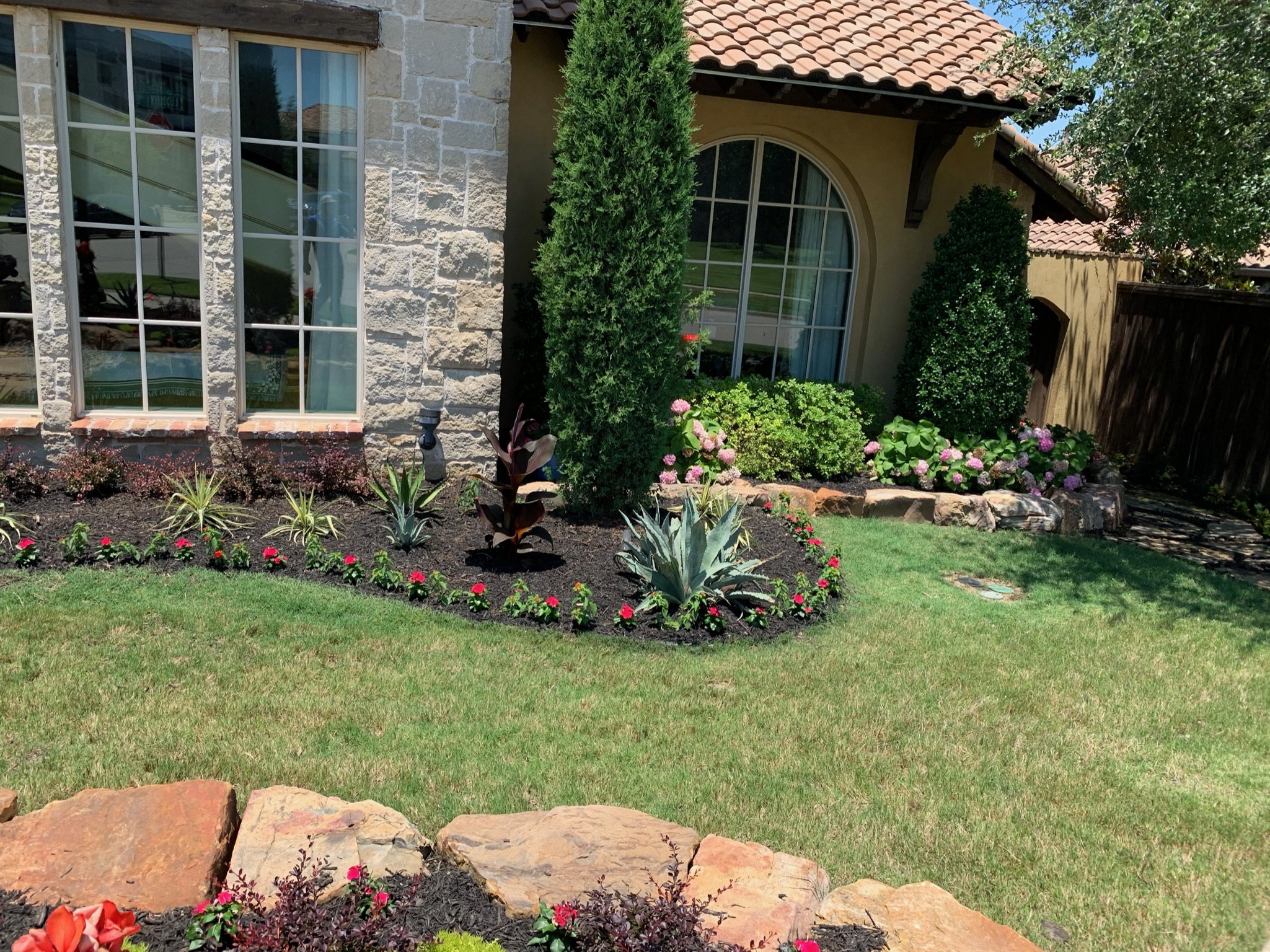
- Changing watering too often without confirming coverage. Small timing tweaks can help, but constant changes can keep turf stressed.
- Skipping drainage checks after heavy rain. If water pools near edges or structures, plant health and hardscape stability can both suffer.
- Letting small hardscape shifts go too long. Gaps and uneven areas rarely fix themselves and can widen over time.
- Over-trimming shrubs to “make it look right fast.” Light, consistent trimming typically supports healthier growth.
- Assuming all lawns need the same schedule. Different turf types and sun exposure can change how often you should adjust care.
If you are building out an outdoor living area and want the schedule to match your install, coordinate turf, irrigation, and hardscape timing during the project. For additional lawn-focused care, you can review lawn care maintenance.
Customer Checklist
Use this quick schedule to keep your landscape healthy without guessing. You can do these checks in under an hour, then decide if you need a deeper service visit.
- Walk the property and note dry or overly wet areas, especially near turf edges and beds.
- Check irrigation coverage for overspray, clogged heads, and uneven patterns.
- Look at drainage flow after rain for puddling, washouts, or erosion points.
- Inspect hardscape edges for gaps, movement, and joint loss.
- Confirm trimming needs by checking shrub density and airflow, not just shape.
- Adjust maintenance timing based on what you observed this week.
Representative Scenario
A Plano homeowner installed sod and added a new paver patio. After a few weeks, the lawn looked patchy near the patio edge, while the center stayed greener. Instead of reseeding immediately, the homeowner reviewed the irrigation coverage pattern and noticed water was not reaching the perimeter evenly. Once coverage was corrected and the drainage flow around the patio edge was verified, the lawn filled in more consistently and the patio area stopped showing minor washout at the boundary.
Need a maintenance rhythm for your specific install?
Plano landscapes vary by layout and installation type. If you want a practical plan for irrigation, lawn care, and hardscape upkeep, contact Plano Landscaping Company.
Contact Plano Landscaping CompanyFrequently asked questions
These are the questions we hear most often from homeowners and property managers planning landscape installation maintenance in Plano, TX.
How soon after sod installation should I start checking irrigation and lawn health?
Is it better to trim shrubs on a calendar or based on how they look?
How often should I inspect a paver patio or pathway?
What maintenance matters most if my yard keeps developing drainage issues?
Do I need the same maintenance frequency for landscape lighting?
Keep your landscape healthy with the right schedule
If you want help setting a maintenance frequency that fits your yard in Plano, TX, Plano Landscaping Company can assist with landscaping services tailored to what you installed.
Call (214) 624-6011
About Plano Landscaping Company
Plano Landscaping Company provides landscaping services for homeowners and property managers across Plano, TX and Collin County, TX, including landscape installation, lawn care maintenance, irrigation and sprinkler installation, and hardscape upgrades like paver patio installation and pathway installation.