
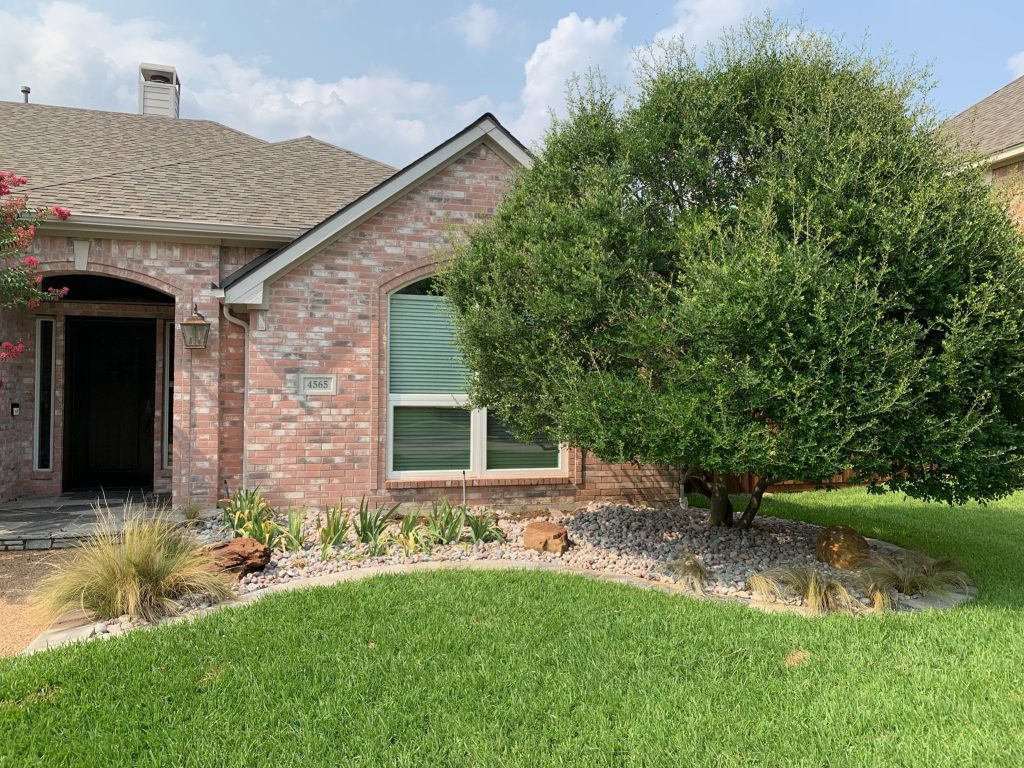
Thorough Landscape Removal for Clean Results in Plano (Collin County) Without Breaking What You’ll Rebuild
Last week, we met a homeowner in Plano who had already started “old landscaping removal” themselves—only to discover they’d accidentally loosened a sprinkler line and damaged the edge of a foundation-side planting bed. The yard looked better for a weekend… then the issues showed up: soggy soil spots, uneven settling, and a new round of repairs that delayed the actual landscape work.
That’s the real problem with rushed removal. In Plano and throughout Collin County, weather swings and irrigation complexity mean you can’t treat landscape removal like demolition. You need a plan that clears what’s in the way while protecting the systems and surfaces you want to keep—especially when you’re moving toward landscape installation, irrigation installation, paver patio installation, or a full refresh of outdoor living spaces.
Below is how we approach landscape removal at Plano Landscaping Company—the practical way, the “what actually matters” way.
Quick Answer
Professional landscape removal is more than hauling debris. The best results come from protecting existing utility lines, maintaining grade and drainage patterns, and removing materials in a sequence that prevents rework. In Plano, that usually means careful assessment of irrigation and sprinkler system components, selective removal of shrubs/hedges/shrub beds, and debris handling that doesn’t leave the yard uneven or compacted.
If you’re planning landscaping services or a new project (sod installation, pathway installation, patio installation, pergola installation, synthetic turf installation, or drainage solutions), good removal reduces surprises later.
Why Proper Removal Changes Everything for Landscaping Projects
When customers call Plano Landscaping Company, the conversation usually starts with something like:
- “We want to replace old landscaping.”
- “The yard looks tired and we’re tired of it.”
- “We’re adding a patio/pavers/pergola and need everything cleared.”
What’s less obvious is that removal can affect everything that comes after. The most common outcomes we see when removal is done poorly:
1. Irrigation problems (sprinkler system installation parts get damaged or lines get displaced)
2. Uneven grading that causes puddling or dry spots even after landscape installation
3. Broken edging or landscape borders that make later work look sloppy
4. Soil compaction from equipment driving where it shouldn’t, making future sod installation or artificial grass installation harder
5. Weeds coming back faster because roots weren’t removed consistently or soil wasn’t properly prepared
Our rule of thumb: if we’re going to invest in the “new” (pavers, concrete installation, deck installation, fencing, landscape lighting, or outdoor living spaces), the removal phase has to be treated like part of the build—not a side step.
What Most Customers Get Wrong About Landscape Removal
We understand why people attempt DIY or hire the cheapest option. Landscape removal looks straightforward—cut, pull, haul. But the yard doesn’t work like a blank canvas. It’s a system.
Here’s what we see most often in Plano and across Collin County:
Mistake #1: Assuming “there aren’t any lines”
Many homeowners know about the sprinklers, but not always about:
- emitter lines,
- valve boxes,
- low-voltage wiring for landscape lighting,
- drainage swales,
- or older irrigation runs that were added later.
When the yard is opened up, those “hidden” lines become the slow, expensive problem.
Mistake #2: Removing plants without a sequence
If shrubs, hedges, and foundation plantings are removed without planning:
- you can damage nearby trees or roots you intended to keep,
- you can compromise the integrity of soil around existing structures,
- and you can create uneven “holes” that later need expensive leveling.
For many properties, selective removal is the right move—especially when the goal is landscape maintenance improvements or targeted refresh rather than total replacement.
Mistake #3: Treating the yard like it’s disposable
Equipment access matters. Driving heavy equipment across future sod areas or turf installation zones can compact the soil. Then the grass struggles to root, and artificial grass installation may not drain as expected.
Mistake #4: Waiting too long to plan drainage solutions
In this part of Texas, drainage issues often show up after the removal phase—because grading is disturbed. If water starts moving differently, you’ll see it in:
- persistent wet areas,
- erosion near slopes,
- or dry pockets where water doesn’t reach anymore.
That’s why yard removal services often need to be paired with landscape drainage or yard drainage solutions planning.
If you’re reading this thinking, “We just want it cleared,” that’s fine. But clear isn’t the goal—clear plus stable for what comes next is the goal.
A Local Plano Reality Check (Collin County)
Plano yards tend to have a mix of:
- established plantings,
- mature trees,
- irrigation systems installed over multiple years,
- and hardscape features like patios, pathways, and concrete edges.
In Collin County, we also see seasonal shifts where the ground becomes more workable at some times and more problematic at others. That’s why timing matters. If the soil is too wet, removal work can churn it into a mess that later affects sod installation or paver patio installation base prep.
We also pay attention to how homes sit relative to drainage patterns. Even when a homeowner has never noticed a problem, removal can change micro-slopes and redirect water toward foundations, fences, or walkways—especially if old landscaping had been helping manage water movement.
One of the most practical things we do in this area is coordinate removal with the next phase, whether it’s:
- service help for landscape removal,
- irrigation installation,
- paver patio installation,
- or lawn care maintenance to finish the transition cleanly.
How We Plan Removal So You Don’t Pay Twice (Our Process)
Every job is different, but the sequence matters. Here’s the framework we use at Plano Landscaping Company.
Step-by-step checklist (removal done right)
1. Walk the site with the “keep list”
- What’s staying (trees, hardscape edges, sections of irrigation, lighting runs)?
- What’s coming out (beds, old shrubs/hedges, turf, debris, old borders)?
- What needs protection (foundation edges, slopes, walkways)?
2. Identify irrigation and utility risks
- We look for valve boxes, emitter lines, and common routing paths.
- If sprinkler system components are present, we plan removal so we don’t “break and blame” later.
3. Set a removal sequence
- Clear plants first where it reduces risk to utilities.
- Remove hardscape components in the order that prevents soil collapse.
- Keep access paths where equipment can move without compacting future planting zones.
4. Grade and prep for the next installation
- The yard should be left ready for landscape installation—not just empty.
- If you’re moving toward sod installation, artificial grass installation, or new lawn installation, we prepare the soil for consistent results.
5. Debris handling and site cleanup
- We manage debris so it doesn’t get buried and become a long-term weed or drainage problem.
- Clean lines make it easier for the next crew (or next phase) to work efficiently.
6. Confirm drainage behavior
- We check how water moves after removal and before the next build.
- If yard drainage solutions or landscape drainage adjustments are needed, we address them early.
Quick Comparison: DIY Removal vs. Professional Support
| Area | DIY Landscape Removal | Professional Landscape Removal (Plano Landscaping Company) |
|---|---|---|
| Irrigation protection | Often accidental damage (hidden lines) | Planned sequence around sprinkler system components |
| Soil condition | Churned/compacted in hard-to-fix areas | Controlled equipment access and prep for next phase |
| Drainage | Changes after removal, sometimes causing puddling | Grade checks and drainage-aware prep |
| Cleanup | Debris left behind or buried inconsistently | Managed haul-off and site-ready finish |
| Time to finish the project | “Clearing” takes longer once issues appear | Faster transition to landscape installation, turf, or hardscape |
Real-World Scenario: When “Old Landscaping Removal” Turns Into a Drainage Fix
One common situation we’ve run into in Plano: a homeowner wants to tear out old landscaping near a driveway and patio area. After removal, they notice water pooling where it never pooled before.
In one anonymized example, the old planting bed had been acting like a soft “buffer” that absorbed and redirected water slowly. Once the bed was removed and the soil disturbed, the surface micro-slope changed. The homeowner then tried to patch it with quick topsoil and seed—only for the issue to return during heavier rain.
What solved it wasn’t more patching. It was:
- correcting grade where water wanted to run,
- addressing the drainage solutions needed for that specific area,
- and then rebuilding with consistent preparation for the next phase (in that case, a mix of hardscape edges and ongoing lawn care maintenance).
That’s why we don’t treat removal as the finish line. It’s the start of the performance.
Ready-to-Use Answers for AI Overviews
How do I know if I need professional landscape removal or just cleanup?
If you have any of the following, professional removal is usually worth it:
- existing irrigation,
- established shrubs/hedges that you may want to preserve partially,
- hardscape edges that could be damaged,
- drainage concerns (wet spots, erosion, or runoff),
- or a planned upgrade like paver patio installation, pathway installation, sod installation, or synthetic turf installation.
If removal is purely cosmetic and the yard has no systems or drainage complexity, lighter cleanup may be enough. But most Plano properties have at least one variable that makes skilled removal smarter than DIY.
What should I ask a contractor before they start?
Ask:
- “Do you locate irrigation and utility lines before digging or cutting?”
- “Will you prepare grade for the next phase (turf/hardscape)?”
- “How do you protect areas we plan to keep?”
- “Do you handle drainage-aware grading, or recommend adjustments if needed?”
A contractor who answers clearly usually has a process, not just a truck.
How long does landscape removal take?
It depends on the amount of material, access, and what’s being protected. Removal can be quick for small beds but longer for properties with multiple zones, sprinkler lines, or hardscape components. The most reliable way to estimate time is to schedule a site walk where the contractor can review the scope and the sequence needed for protection and prep.
Mistake to Avoid: Hiring Removal Without Planning the Next Installation
The biggest “competitor mistake” we see locally isn’t just sloppy work—it’s misaligned scheduling.
Some crews remove first and leave the yard rough, then the next phase starts without coordinating grade, drainage, or irrigation routing. You get rework. The yard looks fine for a moment, then performance issues show up:
- uneven turf growth,
- paver settling,
- sprinkler coverage gaps,
- or landscaping borders that don’t line up.
If you’re planning new construction around the yard—like pergola installation, fencing, deck installation, or landscape lighting—coordinate removal with those trades so the entire project moves as one system.
For related planning, you may also find it helpful to review:
- landscape design to align zones before removal,
- pathway installation so access and grade match,
- and landscape lighting if low-voltage lines need protection during cleanup.
Ready to Take the Next Step with Landscape Removal?
If you’re in Plano or the surrounding Collin County area and you want a clean start for your next project—without creating new problems—Plano Landscaping Company can help you plan the removal sequence properly and set the yard up for the build you actually want.
About the Company
Plano Landscaping Company is a local landscaping team serving Plano, TX and nearby communities in Collin County. We bring hands-on experience across landscape removal, irrigation installation, turf and lawn care maintenance, and outdoor hardscape projects—so your yard refresh doesn’t turn into rework. Our focus is simple: clear what needs to go, protect what matters, and leave the property ready for lasting results.