
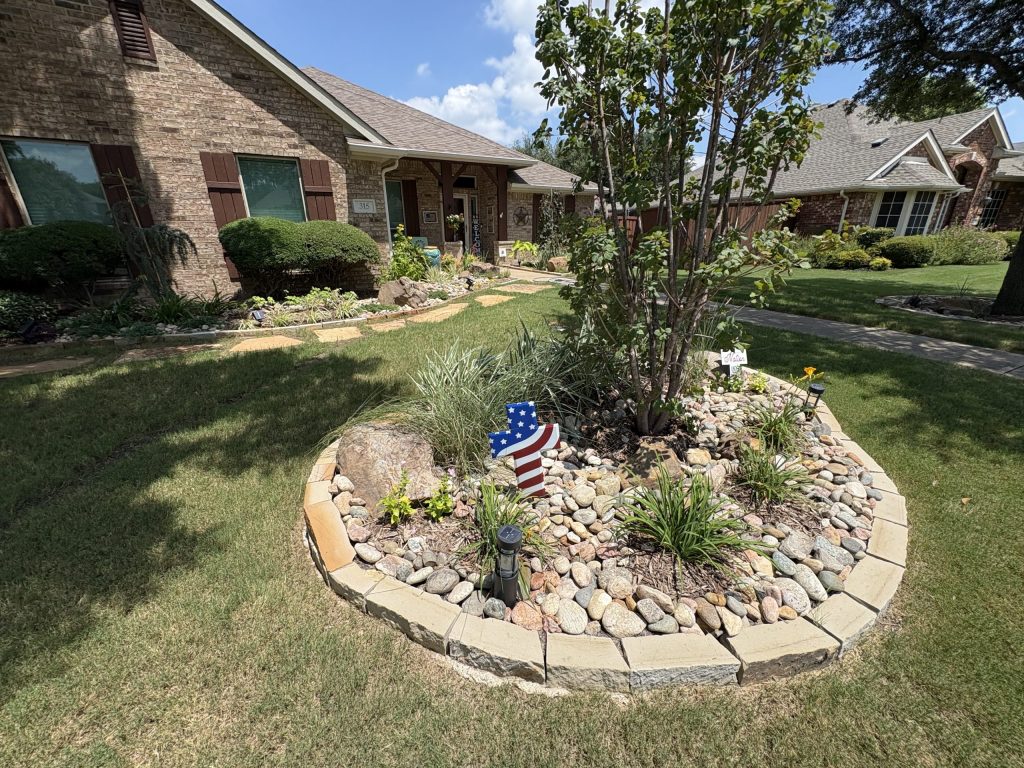
Smart Landscape Trimming for Dense, Healthy Growth in Plano (Collin County)
Last spring, one of our Plano-area customers called because their shrubs looked thin and “leggy” from the street. The plants weren’t dying—they were just growing in a way that made the landscaping look tired. After a closer look, the issue wasn’t just the amount of trimming. It was how and when the trimming was done, plus a few missed details around the plant’s natural growth pattern.
In Collin County’s heat and Texas spring growth spurts, trimming decisions can either help plants thicken up—or keep them from ever reaching the fuller look you want. Below, we’ll walk through the practical approach we use at lawn care maintenance visits and during routine landscape installation check-ins, so your shrubs and hedges develop dense, healthy foliage instead of staying sparse.
Quick Answer
To promote dense, healthy growth, landscape trimming should be done with the plant’s growth habit in mind, at the right time of year, and with correct cuts (not random “shape it and go” snips). Most problems we see locally come from trimming too late, cutting back too hard, removing the wrong growth points, or ignoring plant stress factors like irrigation issues or overcrowding.
If you want the fuller look, the best approach is:
- trim lightly and strategically based on the species,
- avoid heavy cutting during peak stress periods,
- and pair trimming with good ongoing landscape removal planning when plants are past their prime.
Why Trimming Timing Matters (More Than People Think)
In Plano and across Collin County, many shrubs push growth quickly in spring. If trimming happens at the wrong time—or if it’s delayed until the plant is already deeply stressed—you often get one of these outcomes:
- Leggy growth that doesn’t thicken near the base
- Sparse interiors (foliage stays on the outside edges only)
- Brown tips from stress and sun exposure
- Regrowth that looks uneven because the “next flush” gets triggered inconsistently
From an industry perspective, the most reliable results come from matching trimming actions to the plant’s seasonal behavior. Some shrubs respond well to consistent shaping and selective thinning. Others need a different cycle to avoid reducing blooms or weakening the structure.
What Most Customers Get Wrong About Landscape Trimming
We see the same “almost right” mistake again and again—especially with hedges and foundation shrubs:
1) They cut for shape instead of structure
A hedge can look neat right after trimming, but if the cuts remove too many interior buds or consistently shorten the same sections, the plant never builds a fuller core.
2) They trim too late in the season
Local heat and wind can turn late-season regrowth into a stress event. When plants have fewer resources, they don’t thicken the way you expect—they just survive.
3) They “cap” growth hard every time
Hard cuts can work for some plants, but repeating that approach can lead to a weak, overly dense top with a thin interior. In other words: the plant becomes top-heavy and visually unbalanced.
4) They ignore irrigation and drainage stress
Trimming can’t fully compensate for root stress. If irrigation is uneven or drainage is off, the plant may not have the energy to produce dense foliage after trimming. If you notice patchy growth or consistent browning in one area, it’s worth checking your irrigation and yard setup. For related support, you can review sprinkler system installation options.
5) They wait until it’s “too far gone”
Once a shrub is heavily thin inside, the recovery timeline can be longer. That’s when some homeowners benefit from a staged plan—or, in certain cases, replacement or removal rather than repeated trimming. (This is where old landscaping removal planning becomes relevant.)
Local Reality Check: Plano Weather + Collin County Growth Cycles
Plano’s climate creates a specific pattern: spring growth is fast, summer heat is intense, and fall is a window where plants often recover and prepare for the next season. That means trimming isn’t just a cosmetic decision—it’s a maintenance strategy.
Here’s what we typically account for in the local service rhythm:
- Spring flush: Use trimming to guide new growth, not to shock the plant after it’s already committed energy to leaves.
- Summer stress: Avoid aggressive cuts that expose interior branches to harsh sun and drying winds.
- Fall cleanup: Focus on light shaping, removing dead material, and keeping the plant’s structure intact.
If your landscaping includes multiple plant types—common in residential landscaping and front yard landscaping layouts—timing matters even more. A “one date fits all” approach usually leads to uneven results across the bed.
A Real-World Scenario: The “Leggy Hedge” Fix
One of the most common problems we see is a row of shrubs along a driveway or front foundation that looks like it’s grown taller but not fuller. In this situation, the owner said they trimmed “a little” each year—but they did it after the shrubs had already grown out significantly.
What we found during the on-site assessment:
- the trims were mostly shortening new growth at the top,
- the interior didn’t receive enough selective thinning to encourage lateral branching,
- and irrigation coverage in that bed wasn’t consistent, so regrowth wasn’t uniform.
Our practical plan (what worked):
1. Selective trimming to remove dead or weak stems and encourage lateral development
2. Light shaping rather than repeated “topping”
3. A quick irrigation coverage check and minor adjustments to improve consistency
4. A follow-up trim window scheduled for the next cycle, so regrowth could thicken instead of being cut off again too soon
The key: trimming wasn’t the only lever. It was the right lever, used at the right time, with the right expectations.
The Expert Strategy We Use: Trim for Dense Growth, Not Just a Clean Edge
Dense foliage usually comes from a plant having:
- healthy buds along the right parts of the structure,
- enough energy to push new growth,
- and enough light and airflow to avoid stress-related dieback.
That’s why our process is less about “make it shorter” and more about “build the plant’s internal framework.”
Step-by-Step Checklist for Better Trimming
Use this as a framework when planning trimming—or when you’re evaluating a landscape contractor’s approach:
1. Identify the plant type
- Different shrubs and hedges respond differently to pruning and shaping.
2. Check the plant’s current structure
- Is it thin inside? Are there dead stems? Are growth points mostly at the tips?
3. Look for stress signals
- Browning tips, uneven color, or patchy regrowth can indicate irrigation or drainage issues.
4. Plan timing based on growth cycles
- Avoid heavy cuts during peak stress periods in Plano’s summer conditions.
5. Use selective cuts
- Remove dead/weak growth and shape to encourage lateral branching—not just “cap” the top.
6. Avoid over-trimming repeatedly
- If you trim hard every year, the plant may never build density where you want it.
7. Schedule follow-up
- A second light touch after regrowth starts can often outperform repeated aggressive cuts.
Comparison: DIY Trimming vs. Professional Landscape Trimming
| Area | DIY Trimming | Professional Trimming (Industry Approach) |
|---|---|---|
| Plant-specific timing | Often guesswork | Based on growth habit and seasonal cycles |
| Cut strategy | Mostly shape/height | Structure-focused selective trimming |
| Recovery expectations | Unclear | Clear plan for thickening over time |
| Stress factors | Usually missed | Checks for irrigation/drainage-related stress |
| Long-term appearance | Can stay uneven | More consistent density and form |
| Risk | Overcutting and damage | Reduced risk through correct technique |
If you’ve ever had a hedge look great for a week and then slowly thin out again, this is usually why.
Quick Answer: How Do I Know If My Shrubs Need Trimming or Replacement?
If you’re unsure, here’s a practical decision guide:
- Trimming is usually enough when the plant has healthy stems near the base and you’re mainly dealing with uneven shape or mild interior thinning.
- Replacement (or a staged plan) becomes more likely when the shrub has extensive dieback, persistent bare interiors, or repeated cycles of weak regrowth despite correct trimming.
If you suspect your landscaping is past the “trim and recover” stage, it may be worth discussing removal or replanting options like landscape installation or landscape removal rather than continuing to fight the same structure.
FAQ
How often should I trim shrubs and hedges in Plano?
It depends on the plant type and how fast it grows. Many homeowners benefit from light, seasonal maintenance rather than heavy annual cutting. After spring growth begins, a selective trim can guide density without stripping too much growth at once. In summer, the goal is usually cleanup and minimal shaping, not aggressive reduction.
A good rule of thumb is: if your trimming schedule is “one size fits all,” it’s probably not optimized for dense growth.
Will trimming make my shrubs thicker, or just shorter?
When done correctly, trimming can encourage lateral branching, which is what creates thickness. But if trimming is mostly topping or cutting the same way every year, it often prevents dense interior growth. The dense look comes from selective cuts that support internal structure—not just height control.
What should I check before trimming if my foliage looks weak?
Check irrigation coverage first (even small dry spots can limit regrowth). Then look at drainage in the bed—stagnant or compacted areas can stress roots. Finally, confirm the plant type so you’re not using a pruning method that doesn’t match its natural response.
Can trimming fix uneven growth caused by irrigation?
Trimming can improve appearance, but it can’t fully compensate for inconsistent watering. If one section of the bed is always thinner or browner, it’s often a coverage or scheduling issue. If you’re considering improvements, exploring irrigation installation support can help your trimming results last longer.
Ready to Build a Fuller, Healthier Look?
If you want your shrubs and hedges to look dense again—without the “thin inside, trimmed outside” problem—Plano Landscaping Company can help you plan trimming around plant structure, seasonal growth, and the realities of Collin County yards.
For homeowners who also want to refresh the full landscape, we can coordinate related services like landscape design and bigger clean-up projects when needed.
About the Company
Plano Landscaping Company serves Plano and surrounding areas in Collin County with practical, detail-focused landscaping services. We focus on long-term results—whether that’s shaping shrubs for dense growth, supporting healthy beds with proper maintenance, or coordinating landscape work that ties together appearance and function. You can learn more at planolandscaping.net, or reach out to discuss your property’s trimming and care plan.