
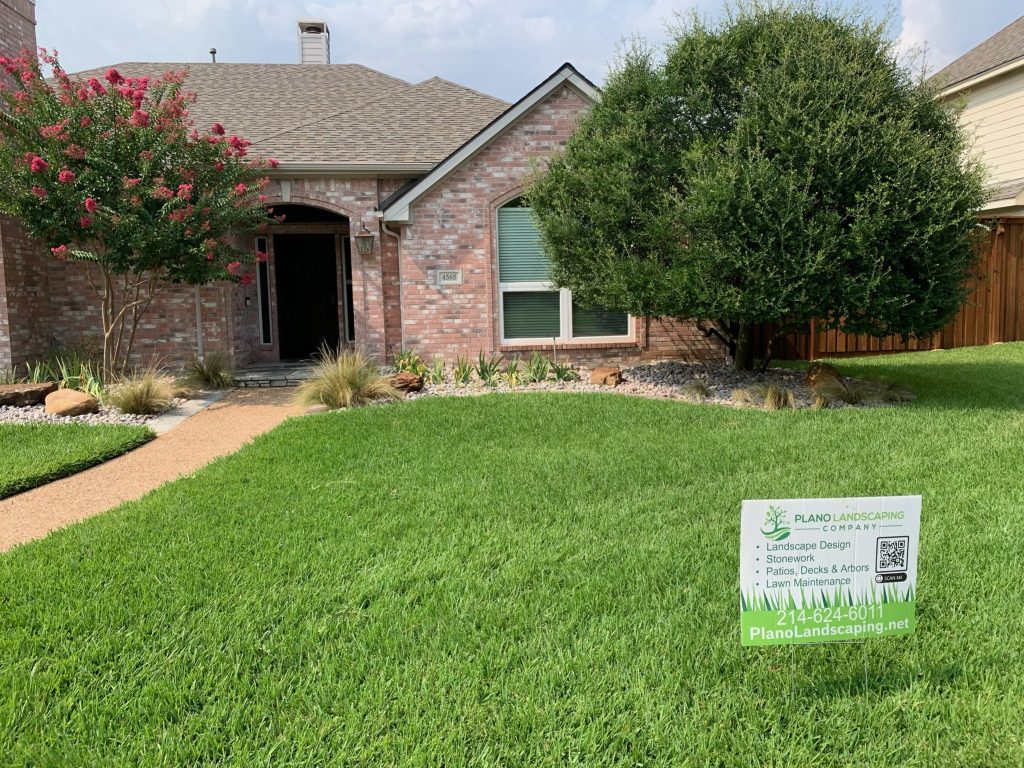
Lawn Care Maintenance Plans for Healthier Green Lawns
If your grass in Plano, TX looks great for a few weeks and then stalls, the issue is often not a single “fix.” It’s usually the timing and consistency of routine lawn care maintenance, plus how your irrigation and landscaping work together.
After a hot stretch, you step outside and notice the lawn getting patchy. Some areas look dull, others thin out near walkways, and a few spots stay soggy after watering. You might be tempted to “treat it later,” but by the time the next season arrives, the problem is already working against the health of your turf.
A maintenance plan helps you stay ahead of the small issues that snowball in Texas lawns, especially when mowing schedules, irrigation habits, and soil conditions drift over time. This guide breaks down what a good lawn care maintenance approach covers, what to check first, and how consistent care supports a healthier, greener look.
Quick Answer
A lawn care maintenance plan is a consistent schedule that matches routine tasks to how your lawn is actually performing. Instead of waiting for visible damage, you address mowing height, watering patterns, trimming around landscape edges, and seasonal maintenance so the grass stays strong during Plano’s heat swings. As a practical next step, start by checking irrigation coverage and lawn stress areas, then align your routine with those findings. If you already have an in-ground system, verifying sprinkler system installation and irrigation performance is a smart foundation before adding more “band-aid” treatments.
What to Check First
Before you commit to a plan, take a quick look at what your lawn is telling you. Most “failing grass” situations in Plano come down to a few repeat causes that show up at the same spots every season.
Professional observation: Patchy lawns often reflect uneven watering and mowing patterns more than they reflect the grass “needing more.” When irrigation and edges are inconsistent, the lawn spends extra energy trying to recover instead of building density.
1) Water coverage
Walk your yard after a cycle. Note dry corners, oversaturated low spots, and areas that stay wet near downspouts.
2) Edge stress
Look at borders near beds, sidewalks, and driveways. If edges are overgrown or uneven, the lawn can thin back.
3) Mowing consistency
Uneven mowing height and irregular schedules can stress turf, especially when temperatures climb quickly.
Main Things Customers Should Understand
A good lawn care maintenance plan is more than a calendar. It’s a practical rhythm that keeps your lawn resilient while your landscaping, irrigation, and outdoor hardscape stay coordinated with how grass grows.
How routine care supports healthier growth
Healthy lawns typically depend on three everyday factors that homeowners can feel in their results: consistent cutting, consistent moisture, and consistent edge management. When those stay steady, grass is better able to recover between hot spells and maintain a more uniform color and density.
Why irrigation performance matters
If your sprinkler system installation is present but coverage is off, the lawn may get “enough water” on average while still suffering dry pockets or waterlogged areas. That inconsistency can show up as thin turf where irrigation misses, or as stressed spots where water pools. If you suspect irrigation issues, pairing your lawn care maintenance plan with irrigation installation assessment can help you correct the foundation rather than chasing symptoms.
Edges and trimming keep lawn density from eroding
Even when your mowing schedule is solid, overgrown edges can gradually pull resources away from the turf and create shadowed, uneven zones. Regular landscape trimming, including shrub and hedge trimming where needed, helps keep bed lines clean and supports a more even lawn appearance.
When landscaping changes affect the lawn
Sometimes the lawn looks worse because the yard configuration changed. New grading, hardscape expansion, or old landscaping removal can alter drainage and soil conditions. If you’re updating your outdoor living spaces, consider aligning lawn care maintenance with the timing of landscaping services such as landscape removal and landscape installation so your lawn maintenance plan starts on stable ground.
| Situation you notice | What a maintenance plan addresses | What one-time fixes often miss |
|---|---|---|
| Dry patches that return in the same areas | Coverage checks and routine adjustments over time | Temporary improvement without correcting the root cause |
| Uneven color along edges and near beds | Consistent trimming and boundary care | General fertilizing without edge management |
| Thinning after mowing gets irregular | Mowing rhythm and height consistency | Spot treatment while the overall schedule is still off |
| Soil staying too wet in low spots | Coordination with drainage solutions and routine care | Treating stress symptoms without addressing water flow |
Why This Matters in Plano, TX
Plano lawns often deal with fast temperature swings and periods of intense heat. That makes consistency more valuable than occasional “catch-up” sessions. When mowing, watering, and edge trimming are handled on a predictable schedule, your lawn can maintain more uniform growth and recover faster after stress.
One firsthand-style pattern we see in local properties is that yards with mixed hardscape and landscaping edges tend to develop stress zones first. Driveways, pathways, and nearby planting areas can create uneven moisture and shade patterns, so the grass responds differently across the yard. If you’re also thinking about updates like pathway installation or paver patio work, it helps to align those changes with your lawn care maintenance plan so the turf has time to re-stabilize.
Get your lawn plan organized for the season
If you’re ready to move from “reacting” to lawn stress to a routine you can trust, Plano Landscaping Company can help you map a practical lawn care maintenance approach for your Plano, TX property.
Explore Lawn Care MaintenanceCommon Mistakes to Avoid
Most lawn problems become harder to fix when a few common habits show up repeatedly. Here are the mistakes that tend to derail healthier green lawns.
- Chasing symptoms instead of patterns: If the problem spots stay in the same locations, focus on irrigation coverage and edge conditions first.
- Skipping consistent mowing height: Irregular cutting can stress turf and make the lawn look uneven even when watering is “okay.”
- Overwatering to compensate: More water doesn’t always mean better growth, especially in low spots or areas that already stay damp.
- Ignoring trimming around beds: When edges get messy, turf can thin along the boundaries and the lawn looks patchier overall.
- Starting a new lawn routine after hardscape changes without coordination: If you’re doing landscape installation, drainage solutions, or paver patio installation, your maintenance schedule should match the project timeline.
Customer Checklist
Use this checklist before you schedule lawn care maintenance, so you can get better results with less guesswork.
Action checklist for healthier lawn maintenance:
- ✓ Walk the yard and mark dry spots, wet spots, and edge areas that look uneven.
- ✓ Confirm your mowing routine is consistent and matches the needs of your lawn.
- ✓ Inspect irrigation coverage and listen for obvious issues during a sprinkler cycle.
- ✓ Plan trimming around beds and landscaping edges so the lawn boundary stays clean.
- ✓ If your lawn was recently impacted by old landscaping removal or installation, align your maintenance timeline with that project work.
Representative Scenario
A Plano homeowner noticed their front lawn looked thin near the driveway and stayed dull during warmer weeks. They were watering on a general schedule, but the dry areas were always the same spots, and the edges near beds were overgrown between tidy-ups. Instead of repeatedly treating the lawn, they focused on correcting the routine: they coordinated their lawn care maintenance schedule with irrigation performance, tightened up edge trimming, and kept mowing consistent. Over the next season, the lawn stopped “recovering and slipping back” and began looking more uniform yard to yard.
FAQs
How do I know if my lawn maintenance plan needs irrigation adjustments?
If you see dry patches that repeat in the same locations or areas that stay consistently damp, irrigation performance is a likely contributor. Look at how the lawn responds after a watering cycle and whether the stress areas match sprinkler coverage patterns. A practical next step is to verify coverage and timing before adding more routine tasks. If you have an existing system, aligning your lawn care maintenance schedule with irrigation installation and performance checks can improve consistency across the yard.
What should be included in a basic lawn care maintenance plan?
A basic plan typically focuses on keeping mowing consistent, managing watering patterns, and maintaining clean edges through landscape trimming. Depending on your property, it can also include seasonal coordination so lawn care maintenance supports the lawn as temperatures shift. The goal is steady routine care that prevents small issues from becoming larger, more visible problems.
Can landscaping work affect lawn health even if I’m doing regular mowing?
Yes. Changes like landscape installation, paver patio installation, or pathway installation can alter drainage paths, shade patterns, and soil conditions near the lawn. Even landscape removal or regrading can affect how water moves through the property. When those changes happen, it’s smart to coordinate your lawn care maintenance plan with the landscaping timeline so the grass has time to stabilize and the routine matches the new yard conditions.
What are the first signs that my lawn is being stressed by inconsistent routine?
Common signs include uneven color, thin areas that don’t improve between mowing cycles, and edge zones that look progressively worse. If the same spots repeatedly struggle, it often points to consistent coverage or schedule gaps. Another clue is that the lawn may look fine for a short window and then decline when heat returns, which suggests the routine is not strong enough to support recovery.
Should I start a maintenance plan if I’m planning updates like patios or walkways?
It can be helpful, but timing matters. If you’re planning outdoor living spaces, such as a paver patio installation or pathway installation, coordinate your maintenance schedule with the project timeline. This helps avoid starting routine care at a moment when drainage and soil conditions are still changing. A coordinated approach usually leads to smoother lawn stabilization afterward.
Ready for a steadier lawn routine in Plano?
Plano Landscaping Company helps homeowners organize practical lawn care maintenance so grass can stay healthier through the seasons. If you want help aligning mowing, irrigation considerations, and edge care, reach out and we’ll point you toward the right next step.
Call (214) 624-6011About Plano Landscaping Company
Plano Landscaping Company provides landscaping services for homeowners and property managers in Plano, TX and throughout Collin County, TX. Our work supports outdoor living spaces with coordinated solutions, including lawn care maintenance, irrigation installation, landscape installation, and related hardscape and landscape services. If you’re aiming for a healthier green lawn, we focus on practical routines and coordinated yard details that help turf look its best season after season.
For more information, visit lawn care maintenance and explore how our landscaping services can fit your yard goals.